
Nimi Jataka
Nimi Jataka
In the heart of a magnificent kingdom, ruled a just and wise king named Nimi. His reign was a beacon of prosperity and peace, where his subjects lived in harmony, untouched by suffering. King Nimi, blessed with immense foresight and a compassionate heart, often pondered the nature of existence and the path to true happiness. He was not content with mere earthly pleasures; his gaze was fixed upon a higher truth, a realm beyond the cycle of birth and death.
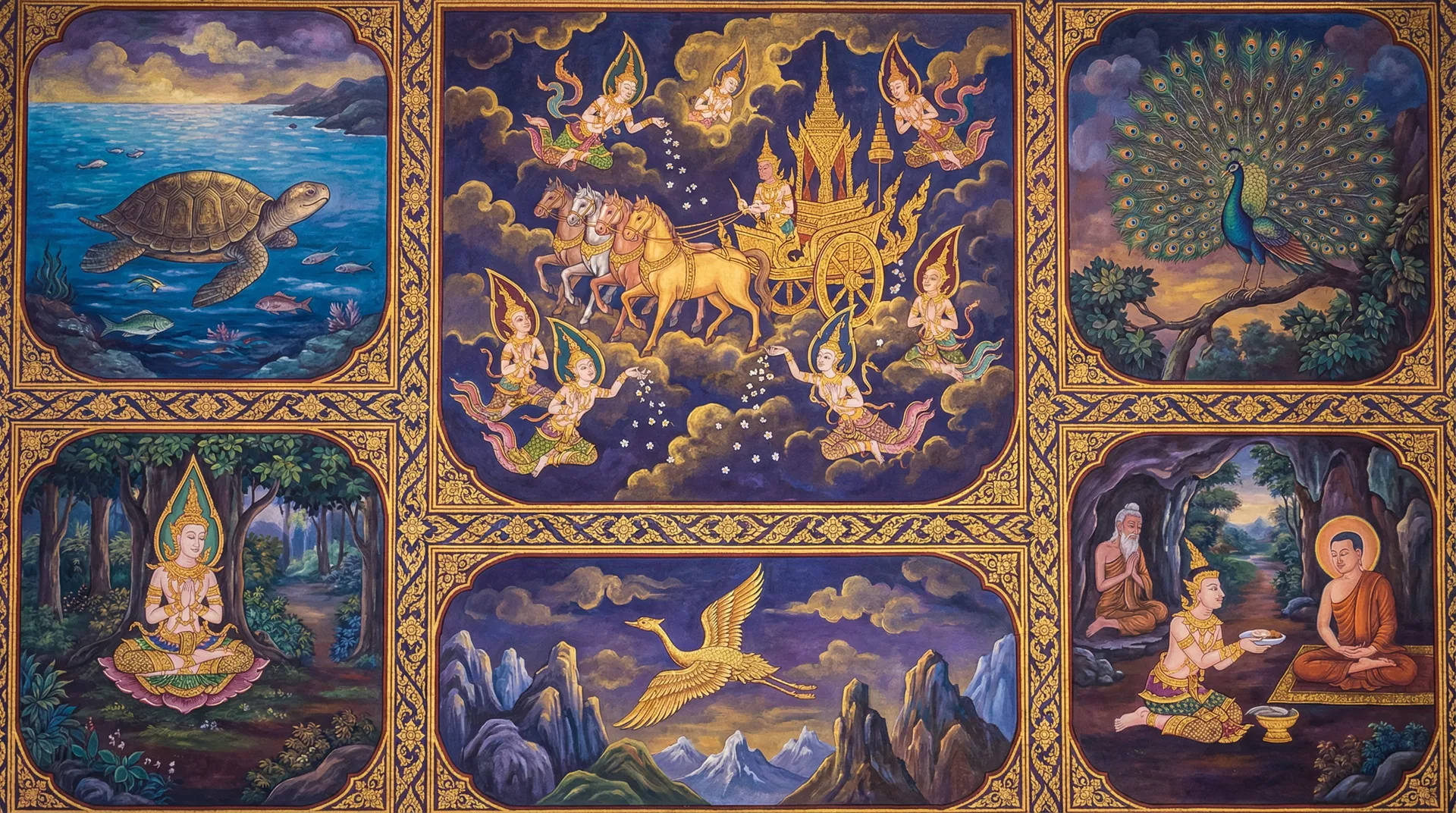
One day, a celestial messenger from the realm of Tavatimsa, where the gods reside, appeared before the king. The messenger, radiating an aura of divine grace, conveyed a message from Sakka, the king of the gods. Sakka, impressed by King Nimi's virtuous deeds and unwavering commitment to righteousness, extended a unique invitation. He invited the king to visit the celestial realm, to witness firsthand the fruits of merit and to understand the profound teachings of the Dhamma.
King Nimi, though humbled and honored, was not easily swayed by worldly displays. He sought not just to witness, but to understand. He agreed to the invitation, but with a condition: that Sakka himself would guide him through the heavens and impart the essential teachings of the Dhamma. Sakka readily agreed, and with a wave of his divine hand, King Nimi was transported to the celestial city.
The journey was awe-inspiring. As they ascended, King Nimi witnessed sights beyond human imagination. Palaces of shimmering gold, gardens adorned with celestial flowers that bloomed eternally, and beings of radiant beauty moved through the air. The air itself hummed with a symphony of divine music and the sweet fragrance of blossoms. Sakka, with infinite patience, began to unveil the wonders of the celestial realm, explaining the karmic causes that led to such blissful existences.
Their first stop was a magnificent hall where Sakka explained the principles of righteous conduct. He showed King Nimi how acts of generosity, adherence to the precepts, and the cultivation of wisdom led to rebirth in such fortunate realms. Sakka emphasized that even the pleasures of the gods were impermanent, subject to the laws of karma and dependent on the merit accumulated in past lives. 'These celestial abodes,' Sakka explained, 'are not an end in themselves, but rather a temporary respite, a reward for virtuous actions. True liberation, the cessation of suffering, lies beyond even these heavenly realms.'
Next, Sakka guided King Nimi through the realms of suffering. He showed him the abysses where beings experienced the bitter fruits of their unwholesome deeds. These were not places of eternal damnation, but rather realms of intense suffering, a consequence of hatred, greed, and delusion. King Nimi witnessed beings tormented by their past actions, their cries echoing through the desolate landscapes. The sight was heart-wrenching, and it deepened his resolve to understand the path that leads away from such suffering.
Sakka then took King Nimi to a serene grove where the Buddha of that age, a fully enlightened being, was teaching. The Buddha's presence radiated an unparalleled peace and compassion. He spoke of the Four Noble Truths, the Noble Eightfold Path, and the ultimate goal of Nirvana. King Nimi listened with rapt attention, his mind absorbing the profound wisdom being imparted. He saw in the Buddha the embodiment of perfect understanding and liberation.
During their celestial sojourn, King Nimi engaged in deep dialogues with Sakka. He asked poignant questions about the impermanence of all conditioned phenomena, the nature of the self, and the path to enlightenment. Sakka, drawing from his own vast experience and understanding of the Dhamma, provided clear and insightful answers. He explained that attachment to worldly pleasures, even divine ones, ultimately leads to suffering. The key, he stressed, was to cultivate detachment, wisdom, and compassion.
One of the most profound lessons King Nimi learned was about the interconnectedness of all beings and the far-reaching consequences of one's actions. Sakka illustrated this with stories of past lives, demonstrating how acts of kindness could ripple through generations and how even small acts of malice could sow seeds of future suffering. King Nimi saw how the entire universe operated under the law of cause and effect, a cosmic dance of karma.
As their time in the celestial realms drew to a close, King Nimi felt a profound transformation within him. The transient nature of celestial bliss was now clear, and his heart yearned for the unshakeable peace of Nirvana. Sakka, seeing the king's sincere aspiration, gifted him a divine chariot, capable of transporting him instantly to any realm where his presence was needed to offer guidance. He also bestowed upon him a divine vision, allowing him to see the suffering of beings even from afar.
Returning to his earthly kingdom, King Nimi was no longer the same. His reign continued to be just and prosperous, but his focus shifted. He dedicated himself to teaching the Dhamma to his people, sharing the wisdom he had gained in the heavens. He used his divine chariot and vision to aid those in distress, dispensing justice and compassion with newfound clarity. He became known not just as a wise king, but as a Bodhisattva, a being on the path to enlightenment, tirelessly working for the welfare of all sentient beings. His teachings emphasized the importance of ethical conduct, mindfulness, and the understanding that true happiness is found not in external possessions or celestial realms, but within the purified mind, free from defilements.
— In-Article Ad —
💡Moral of the Story
Even the highest celestial pleasures are impermanent and subject to the law of karma. True happiness and liberation are found in understanding and practicing the Dhamma, leading to the cessation of suffering.
Perfection: Wisdom (Panna) and Compassion (Karuna)
— Ad Space (728x90) —
More Jataka Tales You May Enjoy
176DukanipātaMahāsuka Jātaka
Mahāsuka JātakaIn the ancient city of Mithila, nestled amidst lush gardens and bustling marketplaces...
💡 True happiness is not found in external possessions or fleeting pleasures, but in the cultivation of inner peace, wisdom, and virtue. The greatest treasure is the joy of a contented mind, free from the bondage of insatiable desires.
 384Chakkanipāta
Mahāpaduma Jātaka
Mahāpaduma Jātaka In the ancient and prosperous kingdom of Mithila, ruled King Janaka, a monarch who...
💡 Lust, deceit, and false accusations lead to immense suffering, while truth, justice, and forgiveness ultimately prevail.
 323Catukkanipāta
Sasa Jataka
Sasa JatakaIn the long-forgotten past, when the Bodhisattva was born as a noble white hare, there la...
💡 True generosity is selfless and boundless, willing to sacrifice even one's own life for the sake of others. Compassion and virtue are the highest treasures, inspiring all beings when remembered.
 292Tikanipāta
Kaccānuppāda Jātaka
The Tale of the Unfortunate ProgenyIn the ancient city of Varanasi, a king named Brahmadatta reigned...
💡 True vision comes not from the eyes, but from the heart. Empathy and compassion are the most powerful tools for leadership and for alleviating suffering.
 405Sattakanipāta
Vidhurapandita Jataka
Vidhurapandita JatakaIn the bustling city of Indapatta, capital of the kingdom of Kuru, ruled King D...
💡 Integrity, wisdom, and adherence to truth are the greatest shields against danger and deception, and ultimately lead to liberation and respect.
309CatukkanipātaMūga-Pakṣa Jātaka
The Silent SageIn the kingdom of Mithila, there lived a king named Vidhuratha. He was a just ruler, ...
💡 True wisdom is not always expressed through eloquent speech; profound understanding and inner peace can be conveyed through silence and action. Do not be swayed by superficial appearances or clever words; seek the deeper truths that lie beneath.
— Multiplex Ad —